Curriculum · Colonial Formation · 24 min
The 1900 Buganda Agreement and the Mailo System
The treaty that made Buganda a colonial partner — and turned clan land into mailo estates.
Draft lesson: historical review pending.
On 10 March 1900, British Special Commissioner Sir Harry Johnston signed an agreement at Mengo with the regents and chiefs of Buganda. The Kabaka, Daudi Chwa II, was an infant; real authority lay with Apolo Kagwa, Stanislaus Mugwanya and Zakaria Kizito Kisingiri, the regents who signed on his behalf. The document is usually called the Buganda Agreement, though it was negotiated under British military pressure and marked a decisive shift in the kingdom's sovereignty.
The agreement recognised the Kabaka and the Lukiiko, confirmed Buganda's special status within the protectorate and set out how the kingdom would be governed. Buganda kept its own courts and parliament, but the Kabaka accepted British overrule and agreed to collect taxes for the protectorate. The British gained a reliable ally and a model for indirect rule elsewhere. In return, the regents and chiefs gained landed property and a secure place in the colonial order.
The most consequential provisions concerned land. Buganda's territory was estimated at about 19,600 square miles. Roughly 9,000 square miles were divided into mailo estates — freehold blocks measured in square miles — and distributed to the Kabaka, royal family, regents and about a thousand chiefs. The rest became Crown land. The word mailo comes from 'mile', and the system created a new class of African landlords with legally registered titles.
Mailo transformed social relations. The bataka, hereditary clan heads, lost control of ancestral land and burial sites (obutaka); peasants who had farmed under customary arrangements became tenants (bakopi) on land owned by chiefs. The agreement did not abolish custom overnight, and many tenants retained rights of occupancy, but the balance of power shifted decisively. Land disputes, evictions and demands for rent regulation became central to Buganda politics for the next century.
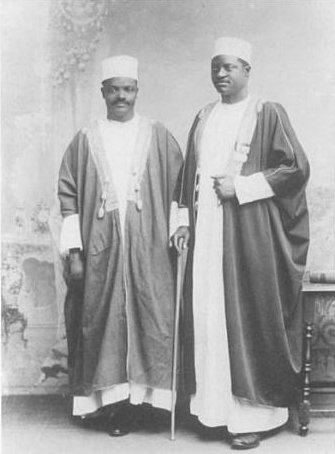
The signatories reflected the kingdom's religious factions. Apolo Kagwa was the Protestant Katikkiro; Stanislaus Mugwanya represented the Catholic party; Zakaria Kizito Kisingiri signed as Kangawo and regent. Mbogo Noho and Kamswaga of Kooki signed by mark, as did others. The distribution of offices and land among Protestants, Catholics and Muslims was part of the agreement's political arithmetic, and it entrenched the religious divisions that had emerged from the wars of the 1880s.
The agreement was not a final settlement. The Bataka movement of the 1920s, the 1945 and 1949 protests, the 1953 Kabaka crisis and the 1966 confrontation all grew out of grievances it created. It also became a symbol: for Buganda nationalists, it was the charter of the kingdom's autonomy; for centralists, it was a colonial device that kept Buganda privileged. The 1955 Namirembe Agreement amended it, and the 1966 crisis effectively ended its constitutional order.
Historians debate whether the agreement was a treaty between equals or an imposed settlement. Johnston negotiated with chiefs who had reason to cooperate, and the British needed Buganda's administration; but the imbalance of power was unmistakable. The agreement's durability came from its usefulness to both sides. It gave the British a workable system of indirect rule and gave Buganda's chiefs land, status and a protected monarchy — at the cost of clan rights and, eventually, political conflict.
Review & sources
Draft: awaiting historical review
This account awaits independent historical review. Linked sources support only the claims identified below.
- The Buganda Agreement of 1900
Cambridge University Press (The Journal of African History). Accessed 2026-10-13.
Supports: The negotiation of the 1900 Agreement, the mailo distribution, the Lukiiko, and the displacement of Bataka rights.
Detailed analysis of the 1900 Buganda Agreement, Mailo land distribution, and the Lukiiko.
- A History of Buganda from the Foundation of the Kingdom to 1900
Longman / Africana Publishing (1972). Accessed 2026-11-05.
Supports: The 1900 Agreement text, its signatories and the offices they held.
M. S. M. Semakula Kiwanuka's monograph. Used for the critique of the 'Kitara empire' and Hamitic/Lwo models, the argument that Kimera was not a Mubito and founded a new dynasty, the treatment of Kintu as a period, the Ssese dynastic union, and the 1900 Agreement signatories. Its own chronological tables disagree by about fifty years.
- Fabrication of Empire: The British and the Uganda Kingdoms, 1890–1902
Cambridge University Press (2009). Accessed 2026-11-05.
Supports: The wider context of British conquest and the bargaining that produced the agreement.
D. A. Low's study of British conquest, the Uganda kingdoms, and the improvisation and violence behind colonial state-making.
Glossary
- Mailo
- A system of freehold land tenure introduced by the 1900 Agreement, measured in square miles and granted to the Kabaka, royals and chiefs.
- Bataka
- The hereditary heads of Buganda's clans, whose customary control of land and burial sites was undermined by mailo.
- Obutaka
- Clan land and burial grounds held under customary authority; much of it was transferred to mailo owners after 1900.
- Lukiiko
- Buganda's great council, recognised by the 1900 Agreement as the kingdom's parliament.
- Crown land
- Land claimed by the British Crown under the 1900 Agreement, as distinct from mailo estates.
Quiz
Question 1 of 5