Curriculum · Age of Kingdoms · 20 min
The Busoga Confederacy
Eleven chiefdoms, a shared language and a colonial invention: how Busoga became a kingdom without ever being one.
Draft lesson: historical review pending.
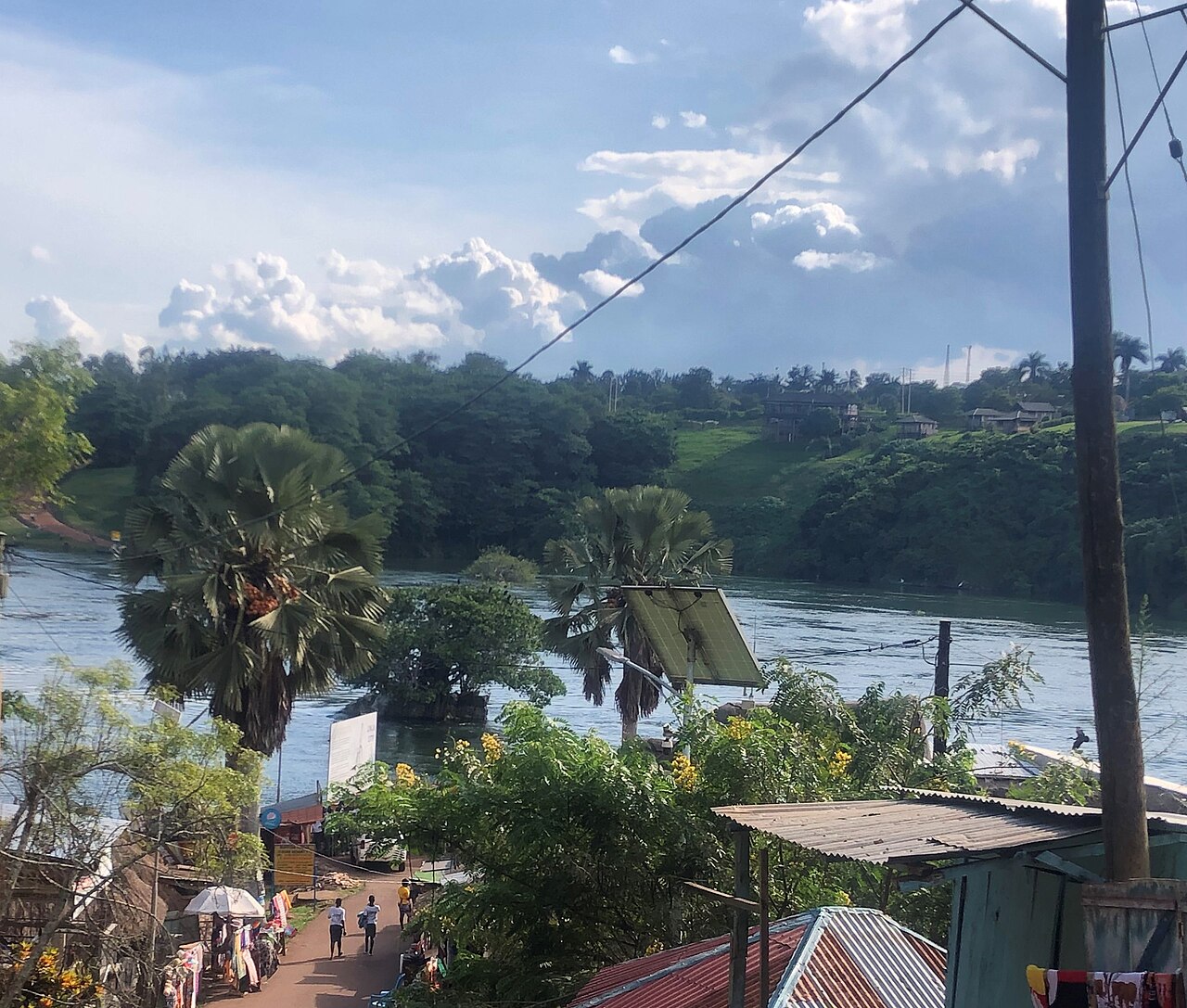
Busoga lies between Lake Victoria, the Victoria Nile and Lake Kyoga, in the fertile lake-shore country of eastern Uganda. Its people, the Basoga, speak a Bantu language closely related to Luganda and share many clan traditions with their neighbours. Before the twentieth century, however, they did not form a single kingdom. The region was a confederation of hereditary chiefdoms, each with its own ruler, capital and royal regalia. The traditions count eleven: Bugabula, Bulamogi, Kigulu, Luuka, Bukono, Busiki, Bugweri, Bukooli, Bunya, Bunyole and Butembe.
The origin stories trace several chiefly lines to Bunyoro. A prince of the Babito, Mukama Namutukula, is said to have crossed Lake Kyoga with his wife and settled at Iyingo, in present-day Kamuli. Five of his sons became the founders of major chiefdoms: Zibondo of Bulamogi, Ngobi of Kigulu, Tabingwa of Luuka, Nkono of Bukono and Kitimbo of Bugabula. Other chiefly houses — Wakooli, Ntembe, Menha, Kisiki, Luba and Nanhumba — had different origins. The result was a political landscape of small, jealous principalities, not a single state with a capital and a bureaucracy.
Each chiefdom was a miniature kingdom. The chief, often called by a title rather than 'king', governed with a council of elders and clan heads. Land, cattle, fishing rights and trade were the basis of wealth. The Nile and the lake supported fishing, canoe transport and trade; the hinterland grew millet, bananas and other crops. Ironworking and salt were important in some areas. Chiefdoms competed for followers, grazing and access to markets, but they also intermarried and shared ritual and clan ties. The confederation was a culture, not an administration.
Colonial rule forced the chiefdoms together. The British found eleven separate rulers impossible to manage. In 1894 Governor Grant established the Busoga Lukiiko at Bukaleba, a council of chiefs chaired by a colonial official. Semei Kakungulu, a Muganda general, was later appointed president of the Lukiiko; his attempts to impose order provoked resistance and were eventually abandoned. After his removal, the chiefs experimented with a rotating leadership, each chief ruling for three months at Bugembe. Fatigue and rivalry led them, in 1919, to elect Ezekiel Tenywa Wako as president of the Lukiiko.
The title 'Kyabazinga' was created in 1939. It drew on the idea of a father of the people — Isebantu — and gave the colonial administration a single counterpart. The office was elective, not hereditary, and rotated among the chiefly lines. That arrangement preserved the old principle that no one chiefdom should dominate the others, while creating a new symbol of Busoga identity. The kingdom was abolished in 1967 with the other traditional institutions and restored in 1993; the modern Kyabazinga is elected by the chiefs and recognised by the state.
The Busoga case is a useful correction to the idea that every Ugandan people had a king. Busoga's political tradition was confederal and competitive, and its 'kingdom' is largely a colonial and modern construction built on older chiefdoms. That does not make it less real. It means that Busoga's history has to be told through its principalities, their rivalries and their shared culture — not through a single royal genealogy that never existed.
Review & sources
Draft: awaiting historical review
This account awaits independent historical review. Linked sources support only the claims identified below.
- Obwa Kyabazinga: The Busoga Kingdom
Busoga Consortium for Development. Accessed 2026-11-05.
Supports: The eleven chiefdoms, the Lukiiko, the elective Kyabazingaship and the modern kingdom.
Official Busoga Kingdom account of the eleven chiefdoms, the Lukiiko, and the elected Kyabazingaship. Institutional source, not an independent history.
- History, evolution of the Kyabazingaship
Daily Monitor. Accessed 2026-11-05.
Supports: The 1894 Lukiiko, Kakungulu's role, rotational leadership, the 1919 Wako election and the 1939 title.
The eleven hereditary chiefdoms, the 1894 Busoga Lukiiko, Kakungulu's presidency, rotational leadership, and the 1939 creation of the Kyabazinga title.
- A History of Buganda from the Foundation of the Kingdom to 1900
Longman / Africana Publishing (1972). Accessed 2026-11-05.
Supports: The wider interlacustrine context and the caution needed with royal genealogies.
M. S. M. Semakula Kiwanuka's monograph. Used for the critique of the 'Kitara empire' and Hamitic/Lwo models, the argument that Kimera was not a Mubito and founded a new dynasty, the treatment of Kintu as a period, the Ssese dynastic union, and the 1900 Agreement signatories. Its own chronological tables disagree by about fifty years.
Glossary
- Busoga
- The region of eastern Uganda between Lake Victoria, the Nile and Lake Kyoga, home to the Basoga.
- Kyabazinga
- The title of the elected ruler of Busoga, created in 1939; literally 'father of the people' in the Isebantu formulation.
- Lukiiko
- A council or parliament; in Busoga the colonial-era council established in 1894.
- Chiefdom
- A territorial polity ruled by a hereditary chief, the basic unit of precolonial Busoga.
- Isebantu
- 'Father of the people', the praise name attached to the Kyabazingaship.
Quiz
Question 1 of 5