Curriculum · Colonial Formation · 24 min
The Nationalist Vanguard: I.K. Musazi and the Farmers' Movement
Cotton, cooperatives and 'Self-Government Now!': how farmer grievances became Uganda's first national party.
Draft lesson: historical review pending.
The road to Ugandan independence is often told through the careers of lawyers and party leaders. It began, however, in the cotton and coffee gardens of the 1940s, where African farmers confronted a colonial economy that fixed prices, controlled marketing and reserved the most profitable stages of trade for European and Asian firms. The farmers' movement turned economic grievance into a national political language.
Cotton was introduced into Uganda in the early twentieth century and became the main cash crop of the south and east; coffee followed, especially in Buganda and the west. African growers did the work, but Asian-owned ginneries and European trading companies controlled processing and export. The colonial government set prices through marketing boards and used the surplus for development and reserves. Farmers complained that they bore the risk while others took the profit.
The tensions erupted in January 1945, when a general strike spread from Entebbe and Kampala to towns across the protectorate. Domestic servants, drivers, railway workers and public employees demanded higher wages and better conditions. In Buganda, the strike merged with a political challenge to corrupt chiefs and the Katikkiro. The British declared a state of emergency, made arrests and deported organisers. The underlying grievances remained.
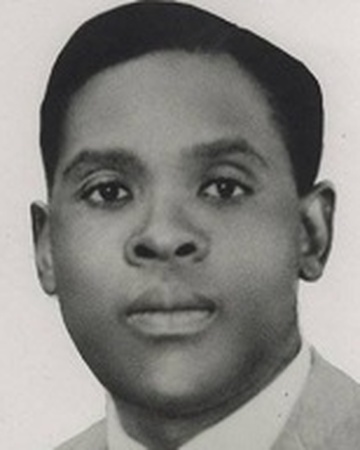
In 1947 Ignatius Kangave Musazi founded the Uganda African Farmers Union (UAFU). Musazi was a teacher, theologian and organiser who had studied in Britain; he argued that farmers should control ginning, marketing and credit through cooperatives. The UAFU demanded the right to sell cotton directly on the world market and to break the Asian monopoly. It spread beyond Buganda into Busoga, Teso, Lango and elsewhere, linking local grievances into a national movement.
In April 1949, farmers, workers and the Bataka movement converged on Mengo. They demanded elected representatives, the removal of unpopular chiefs and a fair price for cotton. The protest turned violent; houses and offices were burned, and the colonial government declared a state of emergency. The UAFU and the Bataka Party were banned, Musazi was detained and later deported, and thousands were arrested. The governor blamed communists; a commission later emphasised economic causes.
Musazi responded by founding the Federation of Partnerships of Uganda African Farmers in 1950 and, on 2 March 1952, the Uganda National Congress (UNC). The UNC adopted the slogan 'Self-Government Now!' and established branches across the country. It was not a mass party in the modern sense: its leadership was educated and largely Baganda, and it soon split. But it marked the transition from protest movements to a national demand for independence.
Musazi's legacy is contested. He is honoured as a national hero and buried at Kololo, yet his economic agenda — cooperatives, fair prices and African control of trade — is often overshadowed by the party politics that followed. The 1945 and 1949 protests showed that decolonisation was not only a constitutional process. It was also a struggle over who would control the products of African land and labour, and that struggle continued after independence. The cooperatives he championed remain part of Uganda's rural economy.
Review & sources
Draft: awaiting historical review
This account awaits independent historical review. Linked sources support only the claims identified below.
- Ignatius Kangave Musazi | Ugandan nationalist and politician
Encyclopaedia Britannica. Accessed 2026-10-13.
Supports: Musazi's founding of the Uganda African Farmers Union in 1947 and the Uganda National Congress in 1952.
Founding of the Uganda African Farmers Union (1947) and the Uganda National Congress (1952).
- I.K. Musazi: The father of Uganda's nationalism
New Vision Uganda. Accessed 2026-10-13.
Supports: Musazi's nationalist organising, the 1945 and 1949 cotton strikes, and his commemoration at Kololo.
Nationalist organizing, the 1945 and 1949 cotton strikes, and national hero commemoration at Kololo.
- The Rise and Fall of Uganda National Congress (UNC) in Uganda, 1952–1962: A Historical Perspective
Makerere University, MA thesis (2013). Accessed 2026-11-05.
Supports: The UNC's origins in farmer and worker grievances, its programme and its fragmentation.
Zaid Sekito's study of the UNC's origins in farmer and worker grievances, its nationalist programme, and its fragmentation.
- Colonialism in Crisis: The Uganda Disturbances of 1945
African Affairs 91:365 (1992), pp. 605–624. Accessed 2026-11-05.
Supports: The 1945 strikes as primarily economic, driven by falling real wages.
Gardner Thompson's argument that the 1945 strikes were driven primarily by wartime economic grievances and falling real wages.
- Ugandan Politics and World War II (1939–1949)
In Africa and World War II (Cambridge University Press, 2015). Accessed 2026-11-05.
Supports: The 1945 general strike, the Bataka movement and the cotton activism leading to the 1949 uprising.
Carol Summers on returning soldiers, the 1945 general strike, the Bataka movement, and the cotton activism that led to the 1949 uprising.
- Reading Revolution in Late Colonial Buganda
Journal of Eastern African Studies 6:3 (2012), pp. 507–526. Accessed 2026-11-05.
Supports: Musazi's intellectual project and the distinction between his Farmers' Union and Bataka activism.
Jonathon Earle's intellectual biography of Musazi, distinguishing his Farmers' Union from Bataka activism and tracing his moral philosophy of monarchy.
Glossary
- Uganda African Farmers Union (UAFU)
- A farmers' organisation founded by I. K. Musazi in 1947 to demand fair cotton prices, ginning rights and cooperatives.
- Uganda National Congress (UNC)
- Uganda's first nationwide nationalist party, founded by Musazi in 1952 with the slogan 'Self-Government Now!'.
- Bataka movement
- A Buganda movement of clan heads and activists demanding land rights, elected representation and limits on chiefly power.
- Cooperative
- A member-owned organisation for marketing, processing or credit; central to Musazi's vision of farmer-controlled trade.
- Marketing board
- A colonial institution that bought cash crops at fixed prices and controlled their export.
Quiz
Question 1 of 5