Curriculum · Colonial Formation · 24 min
The Road to Independence
Parties, kingdoms and the constitution: how Uganda negotiated independence — and why the compromise did not hold.
Draft lesson: historical review pending.
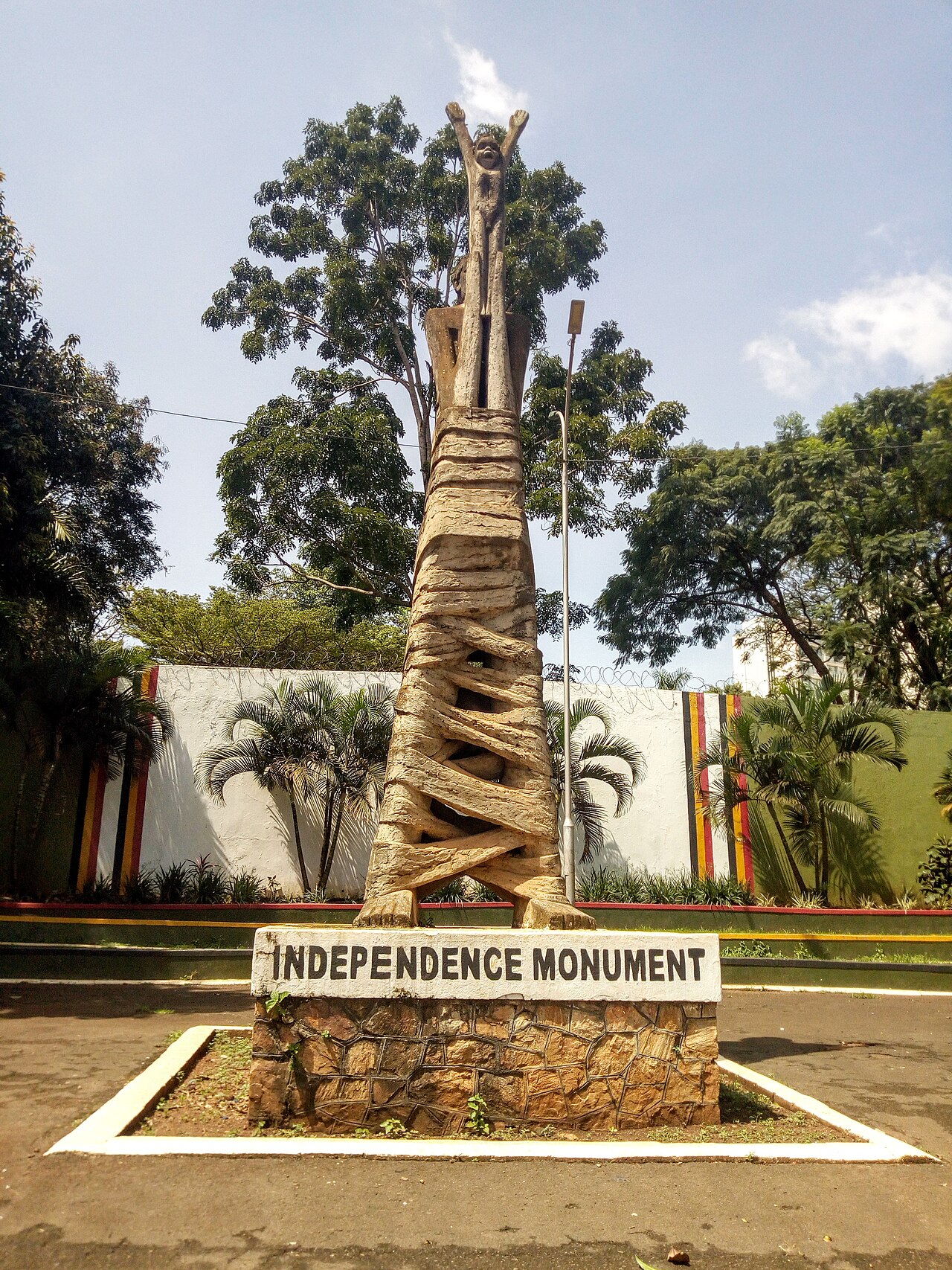
Uganda became independent on 9 October 1962, after a decade of party politics, strikes and constitutional negotiation. The road was not a straight march. It ran through the cotton fields of Buganda, the churches and schools of the south, the kingdoms of the west and the chiefdoms of the east, and it was shaped by conflicts over land, religion and the place of Buganda in the new state.
After the Second World War, returning soldiers and urban workers demanded better wages and conditions. The 1945 general strike and the 1949 riots showed that colonial authority could be challenged. The Uganda African Farmers Union, led by I. K. Musazi, mobilised cotton growers against low prices and Asian ginning monopolies. In 1952 Musazi founded the Uganda National Congress (UNC), the first nationwide nationalist party, with the slogan 'Self-Government Now!'.
The UNC was an elite-led movement, strong in Buganda but weak in organisation. It split in the late 1950s, and new parties emerged. The Democratic Party (DP), founded in 1954 and led by Benedicto Kiwanuka, drew much of its support from Catholics. The Uganda People's Congress (UPC), formed in 1960 under Milton Obote, appealed to Protestants and to non-Ganda regions that feared Buganda dominance. In Buganda, the Kabaka Yekka ('King Alone') movement defended the monarchy and Buganda's autonomy.
The central issue was the constitution. Buganda wanted a federal or quasi-federal status; the UPC wanted a strong central government. The 1955 Namirembe Agreement had made the Kabaka a constitutional monarch and brought Buganda into the Legislative Council, but it did not settle the balance of power. The 1961 elections were won by the DP, and Benedicto Kiwanuka became Chief Minister. In 1962 the UPC and KY formed an unlikely alliance, isolating the DP and giving Obote the premiership.
Independence was negotiated, not simply granted. Britain retained military bases and influence; the Cold War, the Mau Mau emergency in Kenya and the fear of instability shaped Whitehall's calculations. The 1962 constitution created a federal structure with strong kingdom governments, a ceremonial presidency and a parliamentary system. Mutesa II became President in 1963 while remaining Kabaka of Buganda. The arrangement papered over the conflict between Buganda's autonomy and the UPC's centralism.
The compromise did not last. The 'lost counties' dispute, the question of Buganda's representation and the rivalry between Obote and Mutesa came to a head in 1966. Obote's forces attacked the Kabaka's palace at Mengo; Mutesa fled into exile; the kingdoms were abolished in 1967. Independent Uganda's first years thus reproduced the colonial state's centralising logic, even as they ended colonial rule.
The independence movement is often remembered through its leaders and dates. Its deeper history is one of farmers, workers, teachers, clergy and chiefs who used parties, petitions, strikes and boycotts to demand a voice. That history is also a warning: the failure to resolve the relationship between the centre and the kingdoms, and between religious and regional communities, shaped the instability that followed. Independence was a beginning, not a settlement. That unresolved question remains central to Ugandan politics.
Review & sources
Draft: awaiting historical review
This account awaits independent historical review. Linked sources support only the claims identified below.
- The Rise and Fall of Uganda National Congress (UNC) in Uganda, 1952–1962: A Historical Perspective
Makerere University, MA thesis (2013). Accessed 2026-11-05.
Supports: The UNC's origins in farmer and worker grievances, its nationalist programme and its fragmentation.
Zaid Sekito's study of the UNC's origins in farmer and worker grievances, its nationalist programme, and its fragmentation.
- Formation and Impact of Political Parties in 1950s up to Independence (1962): Lessons for Democracy
Institute of Development Studies, University of Dar es Salaam (2003). Accessed 2026-11-05.
Supports: UNC, DP, UPC and Kabaka Yekka, their religious and regional bases, and the 1961–62 elections.
Overview of UNC, DP, UPC and Kabaka Yekka, their religious and regional bases, and the 1961–62 elections.
- President Sir Edward Muteesa II
State House Uganda. Accessed 2026-10-09.
Supports: Mutesa II's presidency from 1963.
The term heading gives 9 October 1963. The page's narrative also associates the presidency with 1962; the dated term heading is used here.
- The Kabaka Crisis and the 1955 Namirembe Agreement
Encyclopaedia Britannica. Accessed 2026-10-13.
Supports: The 1955 Namirembe settlement and the place of Buganda in the independence negotiations.
Deportation of Kabaka Mutesa II in 1953, anti-federation mobilization, and the 1955 restoration.
Glossary
- Uganda National Congress (UNC)
- The first nationwide nationalist party, founded by I. K. Musazi in 1952 with the slogan 'Self-Government Now!'.
- Democratic Party (DP)
- A party founded in 1954, led by Benedicto Kiwanuka, with strong Catholic support; it won the 1961 elections.
- Uganda People's Congress (UPC)
- A party formed in 1960 under Milton Obote, strongest outside Buganda and committed to a strong central government.
- Kabaka Yekka
- 'King Alone', a Buganda royalist movement formed in 1961 to defend the monarchy and Buganda's autonomy.
- Namirembe Agreement
- The 1955 settlement that made the Kabaka a constitutional monarch and brought Buganda into the Legislative Council.
Quiz
Question 1 of 5