Curriculum · Colonial Formation · 22 min
The Uganda Martyrs
Faith, royal power and memory: what the executions of 1885–1887 meant in Buganda and why they still matter.
Draft lesson: historical review pending.
The Uganda Martyrs are a group of Christian converts, mostly young pages at the court of Kabaka Mwanga II of Buganda, who were executed between 1885 and 1887. They are commemorated by both the Catholic and Anglican churches, and Namugongo, the site of the largest execution, is now one of the most important pilgrimage sites in Africa. The story is usually told as a simple conflict between a cruel king and brave believers. The historical record is richer and more political.
Mwanga came to the throne in 1884, inheriting a court divided between Muslim, Anglican and Catholic factions. The young pages who served at court were at the centre of these struggles. Many had been converted by Catholic White Fathers or Anglican missionaries, and their new faith clashed with the Kabaka's claims on their loyalty. The pages were also expected to obey the Kabaka in matters that Christian teaching condemned, including his sexual demands. Their refusal became a flashpoint.
In October 1885, Mwanga ordered the killing of an Anglican bishop, James Hannington, and his caravan on the road to Buganda. Joseph Mukasa Balikuddembe, a Catholic court official, criticised the killing and was beheaded on 15 November 1885. The following year, Mwanga ordered Christians at court to renounce their faith. Charles Lwanga, the leader of the pages, and a group of Catholic and Anglican converts refused. On 3 June 1886 they were burned alive at Namugongo; others were killed at Munyonyo and elsewhere.
The numbers are remembered differently. The Catholic Church canonized 22 martyrs in 1964; the Anglican Church commemorates 23, and the total killed in the wider persecution was larger. The victims included pages, soldiers, court officials and ordinary Christians. Their deaths were public and deliberately terrifying: the Kabaka was demonstrating that his authority could not be divided.
Why did Mwanga act? Missionary accounts present him as a tyrant opposed to Christianity. Later historians are more cautious. J. A. Rowe argues that the 1886 purge was an isolated episode, that most Christians were spared, and that Mwanga's main aim was to secure his authority against the old chiefs who had placed him on the throne. The Christians were both a threat and a potential ally; his policy shifted with court politics. The pages' refusal of his advances was one element in a wider crisis of royal control.
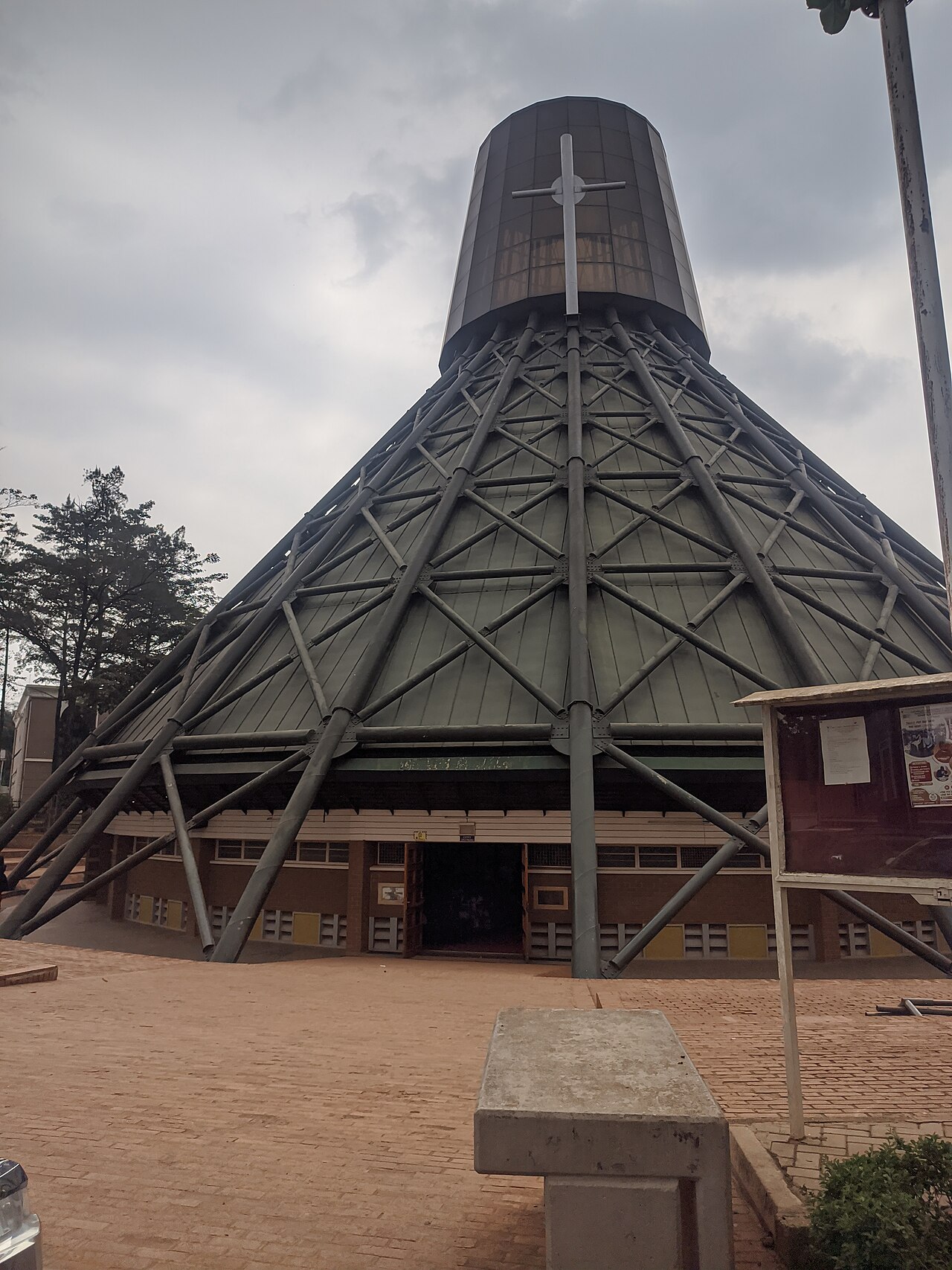
The martyrs became central to Christian identity in Uganda. Catholic and Anglican missions used their story to justify their presence and to claim a Ugandan ancestry for their churches. Namugongo was developed as a shrine; Pope Paul VI canonized the Catholic martyrs in 1964, and pilgrims still walk there each June. The story has also been used politically: colonial advocates cited persecution to justify intervention, while later nationalist writers pointed to Mwanga's resistance to European encroachment.
The memory of the martyrs is contested. For Christians, they are saints who refused to deny their faith. For historians, they are evidence of how religious conversion, royal power and colonial intrusion became entangled in the 1880s. Mwanga himself was not simply a persecutor: he alternated between patronage and repression, and he later fought the British. The lesson is not that religion and politics can be separated, but that the martyrdom story has always been shaped by the people who tell it.
Review & sources
Draft: awaiting historical review
This account awaits independent historical review. Linked sources support only the claims identified below.
- The Purge of Christians at Mwanga's Court: A Reassessment of this Episode in Buganda History
Journal of African History 5:1 (1964), pp. 55–72. Accessed 2026-11-05.
Supports: The 1886 purge as an isolated episode, the sparing of most Christians, and Mwanga's aim of securing authority against the old chiefs.
J. A. Rowe's reassessment of the 1886 purge: an isolated episode, most Christians spared, and Mwanga's primary aim of securing authority against the old chiefs.
- The Ecumenicity of Ugandan Martyrologic Events
Bogoslovni vestnik 80:4 (2020), pp. 803–813. Accessed 2026-11-05.
Supports: The Catholic and Anglican martyrs, the numbers commemorated, and the ecumenical memory of the persecutions.
Emmanuel Orok Duke and Stella E. Osim on the Catholic and Anglican martyrs, the numbers commemorated, and the ecumenical memory of the persecutions.
- Narratives of 'saints' and 'sinners' in Uganda: Contemporary (re)presentations of the 1886 story of Mwanga and Ganda 'martyrs'
In Public Religion and the Politics of Homosexuality in Africa (Routledge, 2016). Accessed 2026-11-05.
Supports: The competing colonial, nationalist and contemporary commemoration of Mwanga and the martyrs.
Karakire Guma Prince on the competing commemorations of Mwanga and the martyrs, including colonial, nationalist and contemporary religious uses of the story.
Glossary
- Namugongo
- The site near Kampala where Charles Lwanga and his companions were burned in 1886; now a major Catholic and Anglican pilgrimage centre.
- Charles Lwanga
- The leader of the royal pages executed in 1886, canonized as a Catholic saint in 1964.
- Mwanga II
- Kabaka of Buganda (r. 1884–1897), who ordered the executions of Christians and later fought British colonial rule.
- Canonization
- The Catholic Church's formal declaration that a deceased person is a saint; the 22 Catholic martyrs were canonized in 1964.
- White Fathers
- The Catholic missionary society that arrived in Buganda in 1879 and built much of the early Catholic mission.
Quiz
Question 1 of 5