Personalities · Contact & Upheaval
Emin Pasha
Governor of Equatoria · Acholi (northern territories)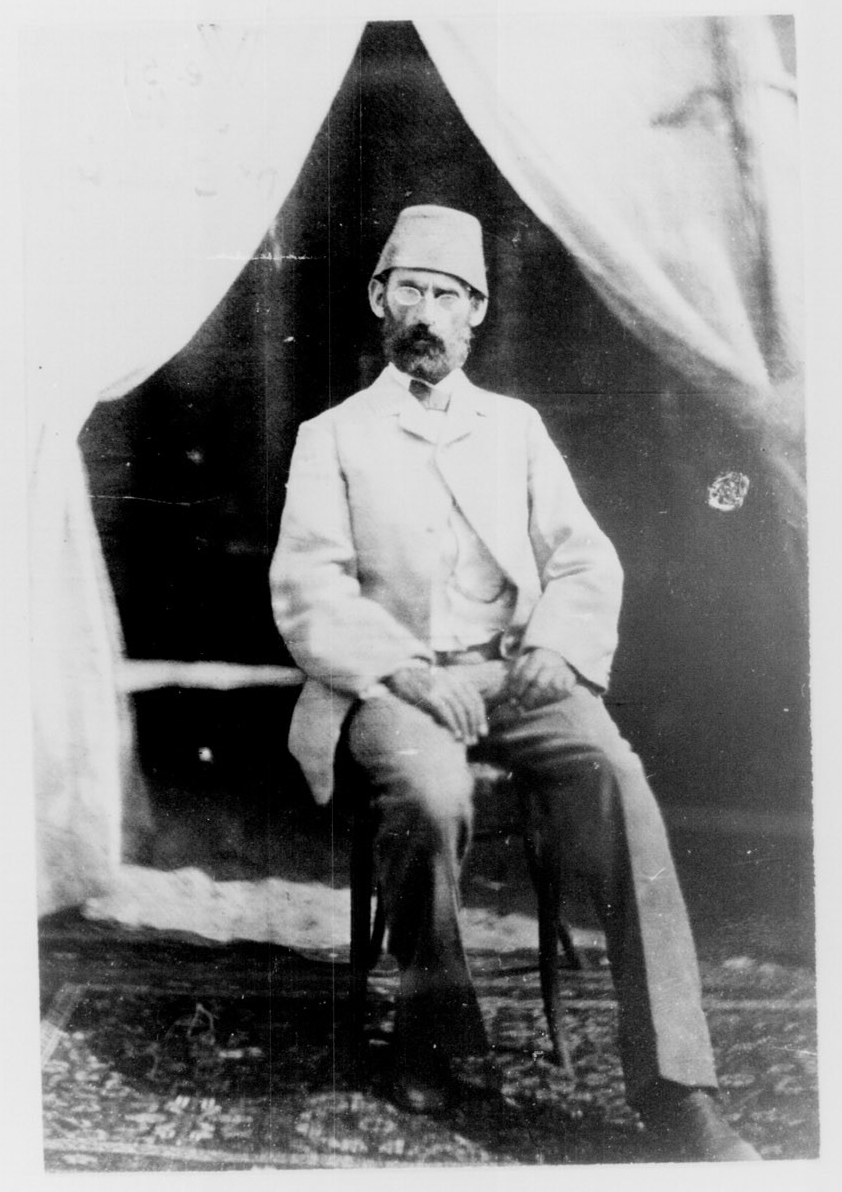
Portrait attribution is available in the asset credits.
Review & sources
Draft: awaiting historical review
This account awaits independent historical review. Linked sources support only the claims identified below.
Claim-specific sources have not yet been supplied for this account.
Emin Pasha, born Isaak Eduard Schnitzer in Silesia in 1840, was a multi-lingual German physician, naturalist, linguist, and colonial administrator whose extraordinary life became inextricably intertwined with the history of northern Uganda and the Upper Nile basin. After serving as a government doctor in the Ottoman Empire, Schnitzer traveled to Cairo in 1875, adopting the name Emin ('the faithful one') and entering the service of the Khedive of Egypt.
In 1876, Emin joined General Charles Gordon in the southern Sudanese province of Equatoria as chief medical officer and confidential diplomatic emissary. Gordon dispatched Emin on sensitive diplomatic missions to the court of Kabaka Mutesa I in Buganda and Omukama Kabalega in Bunyoro. Traveling extensively through northern Uganda, Emin developed a deep scientific and anthropological fascination with the Acholi, Alur, and Madi peoples.
When Gordon departed in 1878, Emin was appointed Governor of Equatoria. Establishing his primary administrative strongholds at Lado and later at the fortified river port of Wadelai on the Albert Nile (in present-day Nebbi/Pakwach District), Emin governed a vast, multi-ethnic territory, cultivating cotton and coffee, mapping unexplored river systems, and amassing monumental collections of African botanical and zoological specimens.
His world was upended in 1881 by the outbreak of the Mahdist Uprising in Sudan. As Mahdist holy warriors swept southward and captured Khartoum in 1885, slaying Gordon, Equatoria was completely cut off from the outside world. Refusing to abandon his post, Emin withdrew his loyal Sudanese troops and their families southward to Wadelai and Dufile, establishing a self-sufficient, isolated sanctuary along the Nile for over three years.
In Europe, sensational press reports depicted Emin as a lonely, heroic Christian governor trapped in the heart of dark Africa, prompting the sensational 1887–1889 Emin Pasha Relief Expedition led by Henry Morton Stanley. When Stanley finally reached Wadelai after enduring catastrophic losses in the Ituri rainforest, he found to his irritation that Emin was reluctant to be 'rescued,' preferring his scientific work and administrative duties to returning to Europe.
Eventually persuaded to march to the East African coast in 1889, Emin promptly entered German imperial service, returning to the interior on scientific expeditions until his assassination by Arab slave-raiders in the eastern Congo in 1892. Emin Pasha remains one of the Upper Nile's most fascinating historical figures: a scholar-governor whose detailed journals provide invaluable eyewitness documentation of northern Uganda's pre-colonial societies.
Timeline
Dates and events are carried over from the supplied record and remain pending independent verification.
- 1840Born Eduard Schnitzer in Silesia, Prussia
- 1878Became governor of Equatoria
- 1885Cut off from Khartoum by the Mahdist uprising
- 1889Relieved by Stanley’s expedition
- 1892Killed by Arab slave traders near Lake Tanganyika