Personalities · Colonial Formation
Ham Mukasa
Buganda Chief, Scholar, and Author · Buganda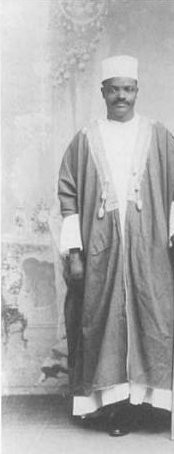
Portrait attribution is available in the asset credits.
Review & sources
Draft: awaiting historical review
This account awaits independent historical review. Linked sources support only the claims identified below.
Claim-specific sources have not yet been supplied for this account.
Ham Mukasa was born around 1870 into the prestigious Buganda aristocracy, the son of Zakariya Kizito Kisingiri, who would later serve as royal treasurer (Omuwanika). Coming of age during the tumultuous, violent reign of Kabaka Mwanga II, the young Mukasa served as a royal pageboy at court, where he learned literacy and converted to Anglican Christianity under the teaching of CMS missionary Alexander Mackay.
During the religious persecutions of May and June 1886, Mukasa narrowly escaped the fiery executions at Namugongo that claimed dozens of his fellow royal pages, suffering a severe musket wound inflicted by the royal executioner Mukajanga. Surviving the ordeal, Mukasa emerged as a brilliant intellectual and military officer among the Christian reformist faction during the religious wars of 1888–1892, forging a lifelong partnership with Sir Apolo Kaggwa.
Appointed to high office under the 1900 Buganda Agreement, Mukasa was enthroned as the Sekibobo (county chief of Kyaggwe), a position he held with exceptional distinction for over three decades. Operating from his administrative seat at Mukono, Mukasa was a visionary agrarian reformer: he championed the introduction of commercial cotton, coffee, and tea farming, built feeder roads connecting rural farmers to Lake Victoria ports, and distributed personal land for the establishment of schools, health centers, and Bishop Tucker Theological College.
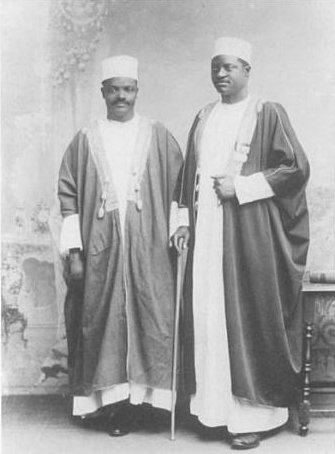
In 1902, Ham Mukasa traveled to Great Britain as the official secretary and companion to Katikkiro Sir Apolo Kaggwa to attend the coronation of King Edward VII. Observing Edwardian British society with acute, witty, and deeply philosophical insight, Mukasa kept meticulous travel diaries that he published in 1904 as *Uganda's Katikiro in England* (translated by Ernest Millar). The book stands as a historic milestone: one of the very first full-length travel memoirs written by an African in the English language.
A passionate patron of modern education, Mukasa was instrumental in the founding of King's College Budo and played an influential advisory role in the establishment of Makerere College in 1922, insisting that African youth receive high-level professional, scientific, and technical education without sacrificing their indigenous language and royal customs.
Living until 1956, Ham Mukasa lived through the transformation of Uganda from an independent pre-colonial empire into a British protectorate on the threshold of national independence. He is revered as one of Uganda's greatest Christian intellectuals, an author of rare genius, and a statesman who dedicated his life to education, agricultural progress, and cultural documentation.
Gallery
Timeline
Dates and events are carried over from the supplied record and remain pending independent verification.
- c. 1870Born in Buganda
- 1880sConverted to Protestant Christianity
- 1902Traveled to Britain for Edward VII’s coronation
- 1904Published "Uganda’s Katikkiro in England"
- 1956Died