Personalities · Contact & Upheaval
Omukama Kabalega
Omukama of Bunyoro-Kitara · Bunyoro-Kitara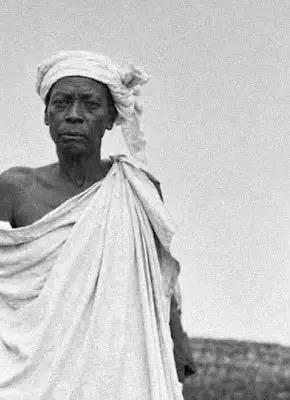
Portrait attribution is available in the asset credits.
Review & sources
Draft: awaiting historical review
This account awaits independent historical review. Linked sources support only the claims identified below.
- Brief profile of Omukama Chwa II Kabalega
Kabalega Foundation. Accessed 2026-10-09.
Supports: Reign, resistance, capture with Mwanga II, and exile.
Used for the capture and return-from-exile dates. Other assertions on the page have not been adopted.
- 100 Years of Kabalega
Kabalega Foundation. Accessed 2026-10-09.
Supports: Return from exile, death in Uganda, and the 1923 centenary date.
The commemoration records the death anniversary on 6 April 1923.
- Kabalega heritage tourism trail
Kabalega Foundation. Accessed 2026-10-09.
Supports: Mpumwire Hill near Jinja as the place of death.
Identifies Mpumwire Hill near Jinja as Kabalega's final resting place during his return journey.
Omukama Chwa II Kabalega was born in 1853 to Omukama Kamurasi Kyebambe IV of Bunyoro-Kitara. Ascending the throne in 1869 after defeating his brother Kabigumire in a fiercely contested succession war, the young monarch inherited a kingdom weakened by territorial losses to Buganda, internal clan rebellions, and the incursions of coastal ivory hunters and Turco-Egyptian mercenaries. Kabalega immediately initiated a radical overhaul of the kingdom's military and administrative institutions.
Breaking with centuries of reliance on feudal clan levies, Kabalega established the Abarusura: a professional standing army divided into disciplined regiments commanded by talented officers promoted on merit rather than royal lineage. Equipped with modern percussion rifles acquired through the Kibiro salt trade and ivory networks, the Abarusura reconquered lost provinces, pacified Tooro, and re-established Bunyoro-Kitara as the premier military force in the Great Lakes region.
Kabalega's reign was defined by unrelenting anti-imperial resistance. In 1872, he drove the British explorer Samuel Baker and his Turco-Egyptian expedition out of Masindi after Baker attempted to annex Bunyoro under the guise of an anti-slavery campaign. When Captain Frederick Lugard and later Colonel Henry Colvile declared a British protectorate in the 1890s and invaded Bunyoro with thousands of Buganda auxiliaries, Kabalega chose total resistance over capitulation.
Refusing to surrender his sovereign crown, Kabalega abandoned his royal palace and conducted a brilliant, punishing nine-year guerrilla campaign across the Budongo forests and the northern plains. Supported by ordinary peasants and loyal chiefs, he continuously harassed British supply columns and fortified garrisons, demonstrating exceptional military tactics against vastly superior Maxim guns and colonial artillery.
In 1899, having forged a historic anti-colonial alliance with his former rival, Kabaka Mwanga II of Buganda, Kabalega was betrayed and captured at Kangai in Dokolo by British forces led by Lieutenant Evatt. Shot in both arms, which resulted in the amputation of his right arm, he was exiled alongside Mwanga to the remote Seychelles Islands in the Indian Ocean, where he remained in detention for twenty-four years.
Allowed to return to Uganda as an old man in 1923, Kabalega died at Mpumwire near Jinja on 6 April 1923 before he could reach his beloved kingdom. He was buried at the royal tombs at Mparo in Hoima. Today, Omukama Kabalega is venerated as Uganda's foremost pre-colonial military hero and an enduring symbol of unyielding sovereignty against imperial conquest.
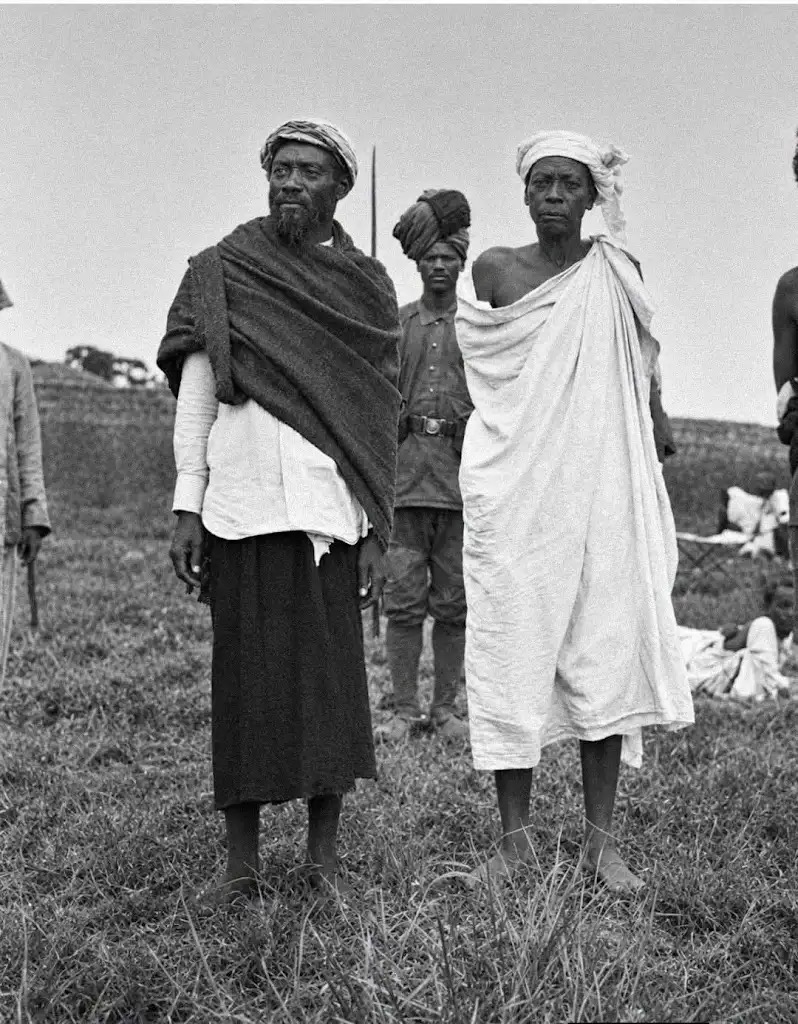
Gallery
Timeline
Dates and events are carried over from the supplied record and remain pending independent verification.
- c. 1853Born in the Bunyoro royal court
- 1870Ascended as Omukama of Bunyoro-Kitara
- 1870sCreated the Abarusura standing army
- 1894British military campaigns in Bunyoro; resistance continued
- 1899Captured alongside Mwanga II and exiled to the Seychelles
- 1923Died at Mpumwire Hill near Jinja on 6 April, returning from exile