Personalities · Colonial Formation
Kabaka Mutesa II
Kabaka of Buganda, First President of Uganda · Buganda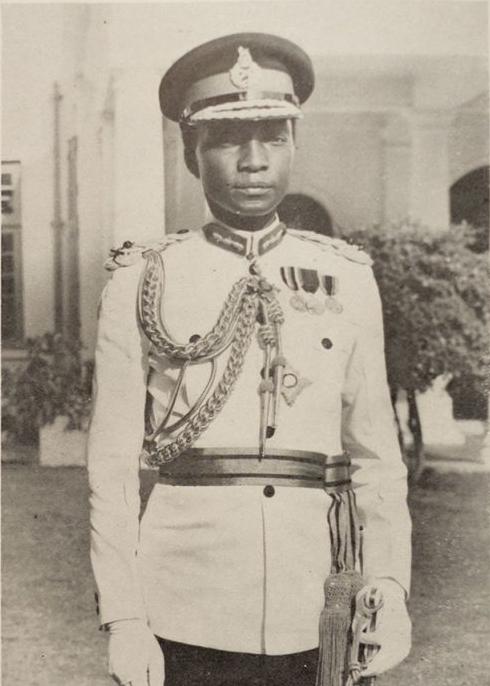
Portrait attribution is available in the asset credits.
Review & sources
Draft: awaiting historical review
This account awaits independent historical review. Linked sources support only the claims identified below.
- President Sir Edward Muteesa II
State House Uganda. Accessed 2026-10-09.
Supports: Presidential term heading (9 October 1963), the 1966 palace attack, flight to England, and subsequent abolition of traditional rulers.
The term heading gives 9 October 1963. The page's narrative also associates the presidency with 1962; the dated term heading is used here.
- The Kabaka
Buganda Kingdom. Accessed 2026-10-09.
Supports: Continuation of the Kabaka institution and the 1993 enthronement of Mutebi II.
Records the enthronement of Ronald Muwenda Mutebi II in 1993.
Sir Edward Frederick William David Walugembe Muteesa Luwangula Mutesa II — affectionately celebrated by his subjects as *King Freddie* — was born on 19 November 1924 to Kabaka Daudi Chwa II and Lady Irene Drusilla Namaganda. Crowned the 35th Kabaka of Buganda in 1942 at the sacred coronation grounds of Budo at the age of eighteen, Mutesa was an aristocratic, articulate intellectual educated at King's College Budo, Makerere University, and Magdalene College, Cambridge, where he served in the elite Grenadier Guards.
Mutesa's early reign was defined by the gathering storm of post-war African nationalism. The decisive constitutional confrontation erupted in 1953 when British Colonial Secretary Oliver Lyttelton gave a speech proposing a British East African Federation uniting Uganda, Kenya, and Tanganyika. Recognizing that an East African federation would entrench the racist white-settler supremacy then dominating Kenya and Southern Rhodesia, Mutesa vehemently opposed the scheme.
When Governor Sir Andrew Cohen demanded that Mutesa endorse the federation and compel the Buganda parliament (Lukiiko) to cooperate under the terms of the 1900 Agreement, Mutesa flatly refused, instead demanding that Buganda be separated from the protectorate and granted immediate self-determination. On 30 November 1953, Cohen placed the Kabaka under military arrest and secretly deported him by royal aircraft into exile in London.
The deportation triggered the famous Kabaka Crisis, sparking profound, disciplined nonviolent resistance throughout Buganda. Baganda men refused to shave, women donned mourning barkcloth and black sashes, and the Lukiiko steadfastly refused to elect a replacement sovereign. Facing total administrative paralysis in Uganda and fierce condemnation in the British Parliament, the colonial office was forced to capitulate at the 1954 Namirembe Conference.
On 17 October 1955, Mutesa II returned from exile to Entebbe to the largest and most jubilant public reception in East African history. Transformed from a traditional monarch into a heroic nationalist champion of African autonomy, Mutesa signed the 1955 Buganda Agreement, which curtailed governor powers and established a constitutional monarchy in Buganda.
As Uganda moved toward independence in 1962, Mutesa formed a strategic political alliance between his royalist party, Kabaka Yekka (KY), and Milton Obote's Uganda People's Congress (UPC). Following independence on 9 October 1962, Mutesa was elected by the National Assembly on 9 October 1963 as the first President and constitutional Head of State of independent Uganda, serving alongside Vice-President Sir William Nadiope and Prime Minister Milton Obote.
Sir Edward Mutesa II remains a towering, historic figure in Uganda's journey to statehood: a monarch who successfully resisted colonial authoritarianism, defended African land from white-settler annexation, and stood as the inaugural president of the newly independent nation.
Timeline
Dates and events are carried over from the supplied record and remain pending independent verification.
- 1924Born, son of Daudi Chwa II
- 1939Became Kabaka of Buganda
- 1953Deported to England by the British
- 1955Restored as Kabaka under a new agreement
- 1963Became Uganda's first President on 9 October
- 1966Fled to England after the attack on his palace
- 1969Died in exile in London