Personalities · Colonial Formation
Omukama Rukidi III
Omukama of Tooro · Tooro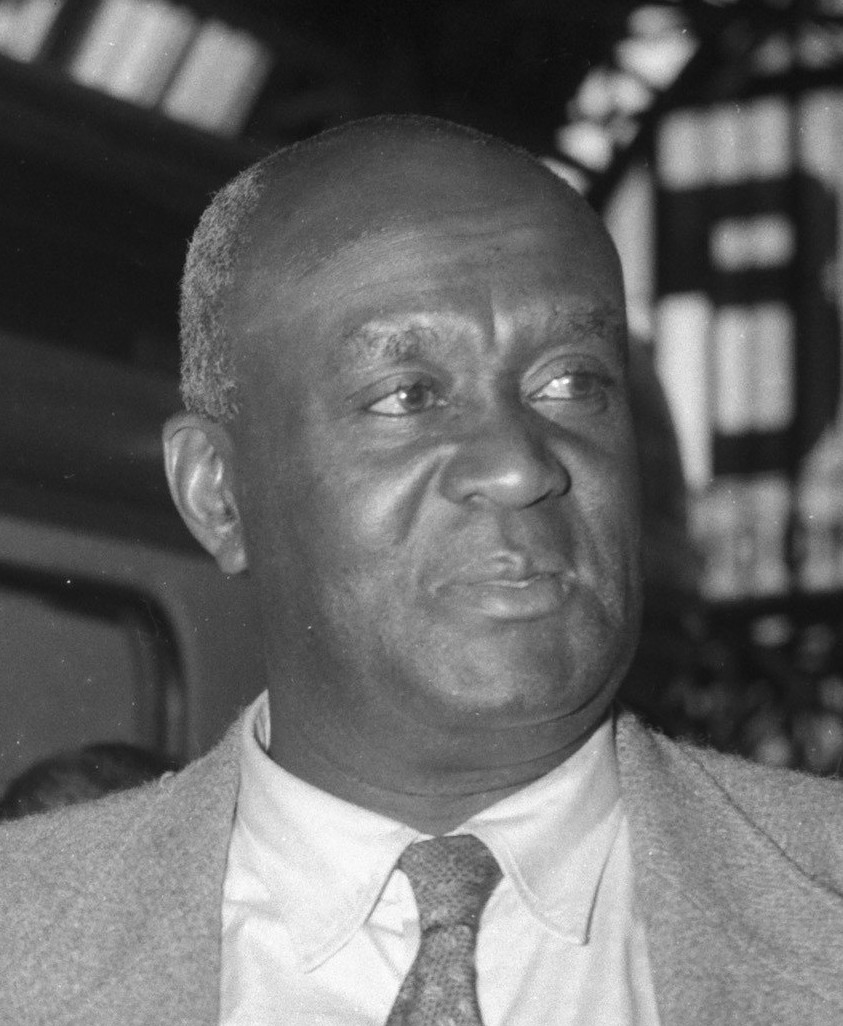
Portrait attribution is available in the asset credits.
Review & sources
Draft: awaiting historical review
This account awaits independent historical review. Linked sources support only the claims identified below.
- Rukidi III of Tooro
Wikipedia. Accessed 2026-10-11.
Supports: Birth, schooling, 1928 accession, 1929 coronation with Batebe, KAR commission, 1953 London visit, order foundation, 1962 knighthood, 1965 death and Karambi burial.
Birth, schooling, 1928 accession, 1929 coronation with Batebe, KAR commission, 1953 London visit, order foundation, 1962 knighthood, 1965 death. Secondary synthesis for a draft record.
Omukama George David Kamurasi Rukidi III was born in 1904 at the royal palace in Kabarole, the eldest son of Omukama Daudi Kasagama Kyebambe VI of Tooro. Educated at King's College Budo, Rukidi was an exceptionally tall, regal, and charismatic prince who combined deep grounding in Tooro's royal customs with a sophisticated command of modern British law and military science.
Upon the passing of his father in 1928, Rukidi was crowned the 11th Omukama of Tooro at Kabarole. Entering his reign at the onset of global economic depression, the young monarch dedicated himself to the systematic modernization of his kingdom beneath the Rwenzori Mountains. He revitalized the Rukurato (the Tooro parliament), modernized native courts, and oversaw the expansion of commercial tea, coffee, and copper mining at Kilembe.
A commissioned officer in the King's African Rifles (KAR), Rukidi maintained a lifelong commitment to military discipline and public service. During World War II, he personally toured military recruitment centers across western Uganda, rallying thousands of Tooro youth to enlist in the KAR and serve with distinction in the Burma and Abyssinia campaigns against Axis forces.
Rukidi was an international ambassador for Ugandan culture. In 1959, he embarked on high-profile diplomatic tours of Europe, representing Uganda's royal institutions at civic receptions in Amsterdam and London, where his majestic presence in ceremonial barkcloth and beadwork captivated international media.
In 1962, on the eve of national independence, Rukidi III was knighted (KBE) by Queen Elizabeth II. He played a pivotal, calming diplomatic role in the constitutional negotiations at the Lancaster House Conferences in London, safeguarding Tooro's federal status within the newly independent nation of Uganda on 9 October 1962.
Omukama Rukidi III passed away in 1965 after a glorious thirty-seven-year reign and was entombed at the royal Karambi Tombs near Fort Portal. He was succeeded by his son, Omukama Patrick David Matthew Kaboyo Olimi VII. Rukidi III is remembered as a progressive, beloved monarch who steered Tooro gracefully from the colonial era into the dawn of sovereign Ugandan nationhood.
Timeline
Dates and events are carried over from the supplied record and remain pending independent verification.
- 1904Born at Karuziika Palace, Kabarole
- 1926Served as police inspector
- 1928Ascended the throne of Tooro
- 1929Crowned at St John's Cathedral, Kabarole
- 1953Attended the coronation in London
- 1962Knighted on 2 June
- 1965Died at Kabarole; buried at Karambi