Personalities · Classical Kingdoms
Rwoth Jalusiga
Paramount Ruler of the Alur · Alur (West Nile)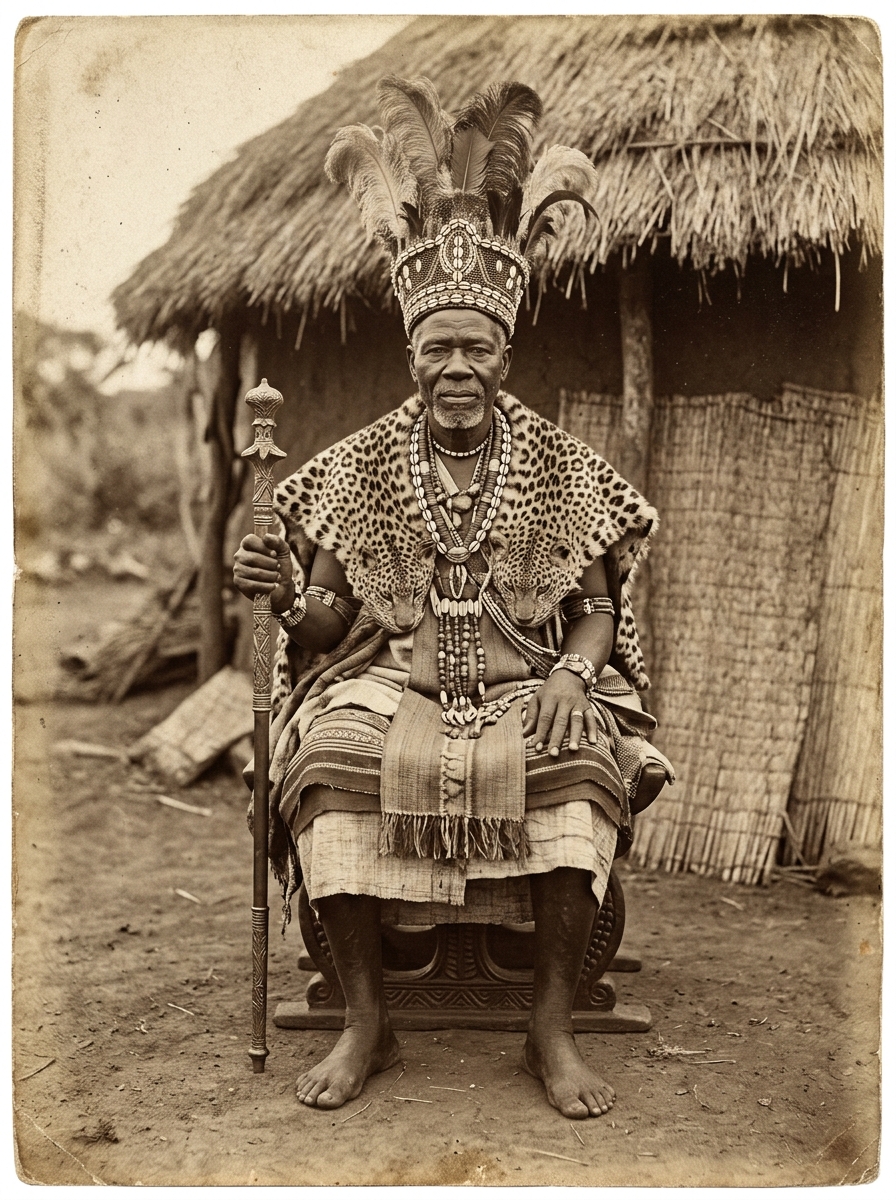
Portrait attribution is available in the asset credits.
Review & sources
Draft: awaiting historical review
Documented in Aidan Southall's anthropological survey and West Nile oral archives.
- Alur | people and society
Encyclopaedia Britannica. Accessed 2026-10-13.
Supports: Alur political processes, ritual authority, and incorporation of neighbouring communities.
Ethnographic and historical summary based on Aidan Southall's Alur Society: A Study in Processes and Types of Domination.
- The enduring heritage of the Alur Kingdom in West Nile
Daily Monitor Uganda. Accessed 2026-10-13.
Supports: Dynastic succession and the traditional seat of the Rwoth of Alur in West Nile.
Traditional chiefdoms, rainmaking rituals, and the royal seat of the Rwoth of Alur.
Rwoth Jalusiga ruled during the mid-19th century as the Paramount Sovereign (Rwoth) of the Alur kingdom in the verdant highlands of West Nile and the northeastern borderlands of the present-day Democratic Republic of the Congo. The Alur represent one of the most intellectually fascinating political developments in African history: a Luo monarchy that expanded across a vast territory not through military conquest, but through consensual judicial arbitration and sacred ritual authority.
According to oral traditions, the Alur migrated from Bahr el-Ghazal in southern Sudan around the 15th century, crossing the Nile near Pubungu (Pakwach) and ascending into the fertile highlands of Nebbi, Zombo, and Mahagi. Unlike their militarized neighbors, the Alur developed an aristocratic royal lineage celebrated for impartiality, wisdom in resolving feuds, and sacred rainmaking powers.
During Jalusiga's reign, neighboring Sudanic and Central African populations — including the Lendu, Okebo, and Madi — regularly suffered devastating droughts, clan vendettas, and the incursions of coastal slave raiders. Impressed by the tranquility and prosperity of the Alur realm, clan elders from these communities repeatedly traveled to Rwoth Jalusiga's court, presenting gifts of cattle and honey, and begging the king to send them a royal prince (*won nyacing*) to live among them.
Once installed, Jalusiga's princes acted as incorruptible judges, arbitrating blood debts, settling land disputes, and performing sacred seasonal rain rituals. Over successive generations, the host populations voluntarily adopted the Alur language, court etiquette, and clan structures, becoming fully incorporated into the Alur kingdom without a single arrow being fired in anger.
The renowned British social anthropologist Aidan Southall famously took the Alur under Rwoth Jalusiga and his lineage as the primary real-world model for his groundbreaking theory of the 'segmentary state,' demonstrating to Western academia that sophisticated, centralized African kingdoms could flourish on the basis of consensual moral authority rather than state violence.
When colonial boundaries were drawn in the early 20th century, the Alur kingdom was temporarily partitioned between the Belgian Congo (Lado Enclave) and British Uganda before its eastern half was formally transferred to the Uganda Protectorate in 1914. Today, the royal seat of the Rwoth of Alur remains an active, revered cultural institution centered at Paidha and Nebbi, celebrated as an authentic African beacon of peaceful, consensual statecraft.
Timeline
Dates and events are carried over from the supplied record and remain pending independent verification.
- c. 1850Reigned as Paramount Rwoth of the Alur in West Nile
- UnknownExtended Alur judicial arbitration over surrounding Sudanic communities
- 1914Alur realm transferred from Belgian Congo/Lado Enclave into the Uganda Protectorate