Personalities · Contact & Upheaval
Kabaka Suuna II
32nd Kabaka of Buganda · Buganda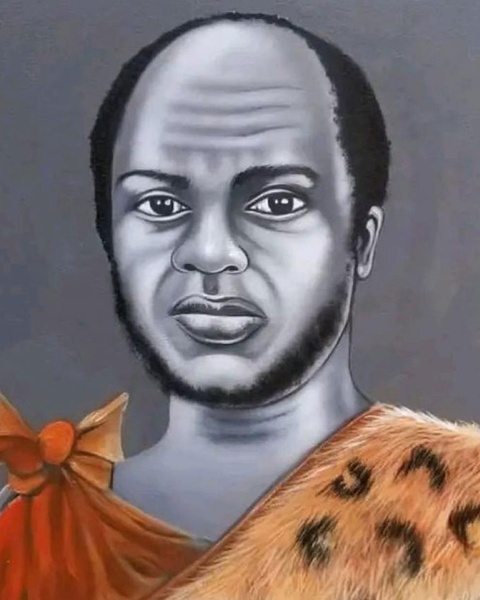
Portrait attribution is available in the asset credits.
Review & sources
Draft: awaiting historical review
Documented in Buganda royal chronicles by Sir Apolo Kagwa and explorer memoirs.
- Suuna II | Kabaka of Buganda
Encyclopaedia Britannica. Accessed 2026-10-13.
Supports: Reign of Suuna II, reception of Ahmed bin Ibrahim in 1844, and importation of firearms.
Reign of Kabaka Suuna II (c. 1832–1856), opening of trade with Zanzibari merchants, and adoption of firearms.
Kabaka Suuna II was the 32nd Kabaka of Buganda, reigning from approximately 1832 until his death in 1856. The son of Kabaka Kamaanya and Queen Nakkazi, Suuna ascended the throne as a dynamic, ambitious young prince and grew into one of the most formidable, feared, and transformative monarchs in pre-colonial East African history.
Suuna's internal statecraft was marked by an unyielding centralization of royal authority. Breaking the independent power of entrenched clan heads (*Bataka*) who had challenged earlier kings, Suuna created a vast network of loyal military commanders appointed directly by the crown, establishing undisputed royal supremacy throughout Buganda's provinces.
The defining turning point of Suuna's reign — and of modern Ugandan history — occurred in 1844, when Suuna welcomed the coastal Zanzibari Arab merchant Ahmed bin Ibrahim to his palace at Wamala. This historic meeting marked Buganda's decisive entry into the global Indian Ocean commercial network. Ahmed bin Ibrahim presented Suuna with exotic luxury goods: mirrors, fine calico and silk textiles, porcelain, cowrie shells, and percussion muskets.
Fascinated by firearms and new technology, Suuna established regular trade caravans linking Buganda to the Swahili coast, exchanging ivory and barkcloth for gunpowder and muskets. Suuna formed Buganda's first specialized rifle regiments, which revolutionized regional warfare and gave Buganda decisive military superiority over neighboring kingdoms.
Suuna was also an intellectual ruler who engaged with Islamic theology, learning Arabic phrases from visiting merchants and initiating court discussions on monotheism and astronomy, paving the intellectual runway for the deeper religious encounters that unfolded under his son and successor, Mutesa I.
In October 1856, while leading a massive military expedition against the Basoga, Suuna contracted smallpox and died suddenly in his royal camp. His body was returned to the capital and entombed at Wamala Tombs, where his grand thatched mausoleum stands today. Kabaka Suuna II is celebrated as the visionary modernizer who opened Buganda to the wider world, introduced global trade currency, and transformed Buganda into the premier military empire of the 19th-century Great Lakes.
Timeline
Dates and events are carried over from the supplied record and remain pending independent verification.
- c. 1832Enthroned as the 32nd Kabaka of Buganda
- 1844Welcomed Zanzibari trader Ahmed bin Ibrahim, initiating Indian Ocean trade
- c. 1850Equipped royal guard with imported muzzle-loading muskets
- 1856Died of smallpox during an expedition; entombed at Wamala Tombs