Personalities · Colonial Formation
Sir William Nadiope
Kyabazinga of Busoga; first Vice-President of Uganda · Busoga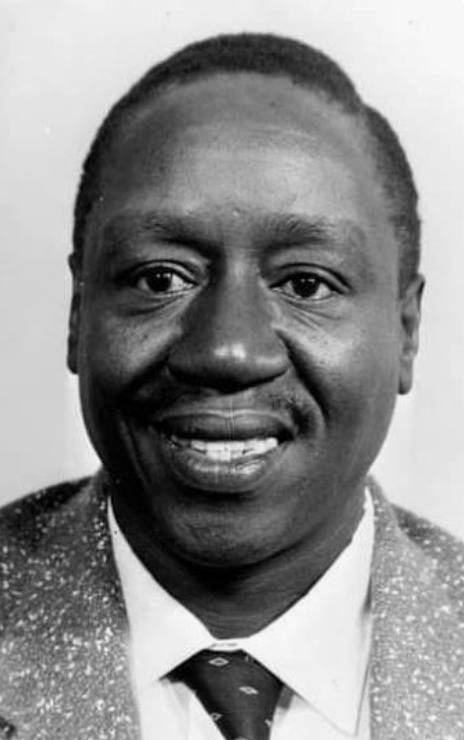
Portrait attribution is available in the asset credits.
Review & sources
Draft: awaiting historical review
This account awaits independent historical review. Linked sources support only the claims identified below.
- Formation of present-day Busoga and the rise of Sir William Nadiope
Daily Monitor. Accessed 2026-10-11.
Supports: Rise to the Kyabazingaship, vice-presidency, fall from favour, exile and imprisonment.
Rise to the Kyabazingaship, vice-presidency, fall from favour, exile and imprisonment. First part of a series.
- Wilberforce Nadiope
Wikipedia. Accessed 2026-10-11.
Supports: 1911 birth, 1930 enthronement, vice-presidency 1962–66, death in 1976; regnal numbering differs between accounts.
1911 birth, 1930 enthronement, vice-presidency 1962–66, death in 1976. Regnal numbering differs between accounts; the record hedges on numbering.
- Today in history: Kyabazinga Nadiope dies after long illness
Daily Monitor. Accessed 2026-10-11.
Supports: Conflicting retrospective: reports a 1979 death aged 85 with WWII service. Cited as inconsistent with the outline used here, not reconciled.
Reports a 1979 death aged 85 with a WWII service history. Conflicts with the 1911–1976 outline used here; cited as a conflicting account, and its hero photograph is Nation Media copyright, not cleared for republication.
Sir William Wilberforce Kadhumbula Nadiope was born in 1911 into the royal house of Bugabula, one of the five hereditary Babito ruling lineages that governed Busoga. The son of Yosiya Nadiope, young William was groomed from childhood for leadership, receiving elite education in Uganda and traveling to Great Britain for advanced studies in public administration.
Returning to Uganda, Nadiope was enthroned as the hereditary ruler of Bugabula in 1930. A towering, charismatic, and politically ambitious leader, Nadiope sought to overcome Busoga's historical fragmentation. For centuries, Busoga had functioned as a loose confederacy of autonomous chiefdoms along the Victoria Nile rather than a single unified kingdom under one monarch.
In 1949, following intense deliberations among the hereditary chiefs and clan councils, Nadiope was elected Kyabazinga of Busoga (the supreme constitutional ruler of Busoga). Assuming the Kyabazingaship, Nadiope transformed the institution into a powerful, cohesive modern monarchy, establishing the Busoga Lukiiko headquarters at Bugembe in Jinja and actively promoting the construction of schools, health centers, and commercial cooperative societies.
As the national struggle for independence accelerated in the 1950s, Nadiope emerged as one of the most influential political kingmakers in Uganda. Recognizing that regional monarchs needed strong national alliances, Nadiope aligned Busoga firmly with Apollo Milton Obote's Uganda People's Congress (UPC), delivering massive electoral support across the eastern region and securing the UPC's victory in the decisive 1962 pre-independence elections.
At Independence on 9 October 1962, Nadiope stood at the apex of Ugandan national leadership. When Uganda transitioned from a British dominion to an independent republic within the Commonwealth in October 1963, Sir William Nadiope was sworn in as Uganda's inaugural Vice-President, serving alongside President Sir Edward Mutesa II and Prime Minister Milton Obote.
Awarded a British knighthood in 1962, Sir William Nadiope governed Busoga with unmatched personal charisma and political sway until the constitutional upheaval of 1966. Passing away in 1976, he is celebrated in Busoga's history as the visionary Kyabazinga who unified the Busoga nation and helped steer Uganda into sovereign independence.
Timeline
Dates and events are carried over from the supplied record and remain pending independent verification.
- 1911Born, son of Yosiya Nadiope of Bugabula
- 1930Enthroned in his father's chieftaincy (reported)
- 1949Elected Kyabazinga of Busoga
- 1962Became Uganda's first Vice-President
- 1966Broke with Obote; fell from favour
- 1976Died (reported; one Monitor retrospective gives 1979)